
In memory of Sir Michael Sobel
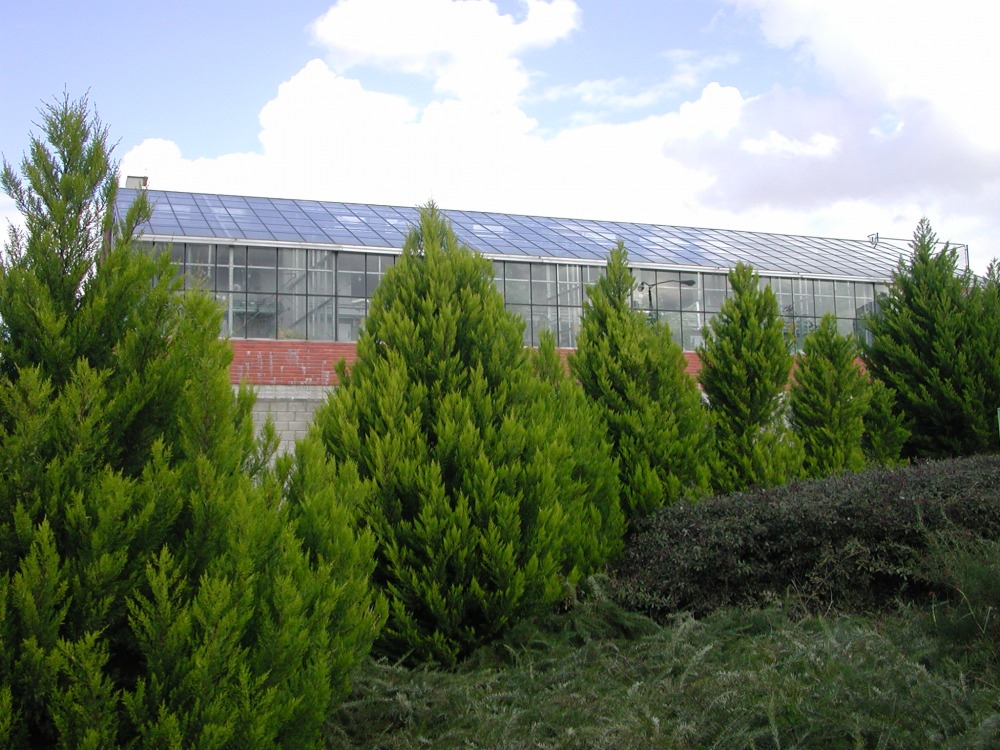
The phytotron is a sophisticated greenhouse equipped with precise means of controlling the environment and thus enables study and research of plant responses to climatic and environmental changes. The phytotron is an important tool for basic and applied research whose importance has increaseed in recent years due to the implications of global climate change on agriculture.
For the researchers of the Faculty of Agriculture, such a controlled facility is essential for studies dealing with environmental influences on plant development and with growing technologies in order to examine the suitability of different plants to growing conditions in different regions. Researchers aim to deepen their understanding of the influence of the environment on different plants: model plants, plants of agricultural and economic value, as well as wild varieties. The objectives of the research are diverse, and include increasing crop yields, optimizing inputs, such as energy, water and human resources, and understanding the effects of environmental factors on plants in different ecosystems.
The only way to assess the environmental impacts and interactions between different environmental factors is to compare plants that grow simultaneously in conditions that differ in one factor only, while other factors are held constant. The phytotron is an ideal facility for such experiments.
Experiments are designed so that adjacent growing rooms can receive identical lighting, temperature control, humidity, day length and watering and mineral feeding regimes as required. Plants grow in tanks on mobile tables and can therefore be transferred between the growing chambers, thereby increasing the number of combinations of different conditions for a more thorough examination of the plants' response.
Our phytotron consists of 4 naturaly lit rooms with and 9 rooms equipped with artificial light. Length of day can be controlled in these rooms, and they can also be kept dark. Temperature and humidity can also be changed according to the experiment. Sensors installed in each room monitor the conditions and are monitored by a computerized system, which allows the temperature to be adjusted to within 1 degree and humidity to be adjusted at up to 5%.