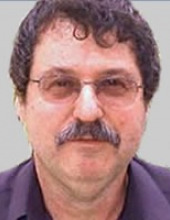
Prof. Amos Nussinovitch
Emeritus
Theoretical and practical aspects of food processing and water soluble polymers.

Head of Institute: Prof. Ido Braslavsky
Administrative manager: Rakefet Kalev
Office Address:
Institute of Biochemistry, Food Science and Nutrition,
Robert H. Smith Faculty of Agriculture, Food and Environment,
The Hebrew University of Jerusalem,
Herzl 229, Rehovot 7610001, ISRAEL
Tel: +972 - (0)8-9489385
Fax: +972 - (0)8-9363208
Email Address: rakefetk@savion.huji.ac.il
Amos Nussinovitch was born in Kibbutz Megiddo, Israel. He is the son of holocaust survivors. Nussinovitch served as a soldier in the October (Yom Kippur) and Lebanon wars and his heritage and the horrors of war have shaped his life, thoughts and attitudes. He studied Chemistry for a B.Sc. degree at the University of Tel-Aviv, and Food Engineering and Biotechnology for B.Sc., M.Sc. and D.Sc. degrees at the Technion-Israel Institute of Technology. Nussinovitch has worked as an engineer in several companies and has been involved in several research and development projects, at companies and universities in both the United States and Israel. His interests are focused on studying the physical properties of liquids, semi-solids, solids and powders, especially gums (hydrocolloids) and their uses, in addition to providing consulting services to industry.
Currently, Professor Nussinovitch is at the Hebrew University of Jerusalem. He is the leader of a large group of researchers working on theoretical and practical aspects of hydrocolloids, including: coating of cells and foods, specialized glues, developing different types of beads and capsules, specialized cellular solids and biological carriers for the food, packaging, water treatment, medicinal and biological control industries. Prof. Nussinovitch has developed a novel glossmeter for the measurement of glossy food surfaces, a crunchmeter for quality control and food development, apparatuses for the continuous monitoring of gel swelling and shrinking, and methods for the electrical drying of food particles. He is the sole author of the books: "Hydrocolloid Applications, Gum Technology in the Food and Other Industries" published in 1997 by Chapman and Hall, and "Water-Soluble Polymer Applications in Foods" published in 2003 by Blackewell. More than 100 reviewed research articles, ~20 patents or patent applications and custom-made apparatuses cover, in part, the achievements, ideas, inventions and solutions accumulated during his long journey. These many years of wandering through some simple and/or non-conventional uses of hydrocolloids in many fields have brought about a thorough understanding of when and how these fascinating materials can be used, particularly where less published information is available.
The intellectual property related to these areas belongs to the Hebrew University of Jerusalem. We are open to joint research projects, both local and international, in these or related fields. We are interested in selling ideas and technique, apparatus and product packages and are open to direct and open discussions regarding joint enterprises with businesses. In these areas, Yissum, the Technology Transfer Company of the Hebrew University of Jerusalem, accompanies and assists us. If you are interested please contact us and we will be happy to assist you.
Water-soluble gums are beneficial in many fields, including adhesives, agriculture, chemicals, construction-industry products, biotechnology, ceramics, cosmetics, explosives, food, paper, textiles, printing, inks, pharmaceuticals, leather and texturization, among others. A brief summary cannot adequately describe the ubiquity and usefulness of water-soluble gums in daily life.
a. Fruit texturization and crunchy fruit cellular products
b. Fractal analysis of porous surfaces
c. Multilayer sponges
d. Specialized, less conventional capsules
e. Methods for size reduction
f. Multilayerd, multitextured foods g. Drug delivery
h. Biological control